
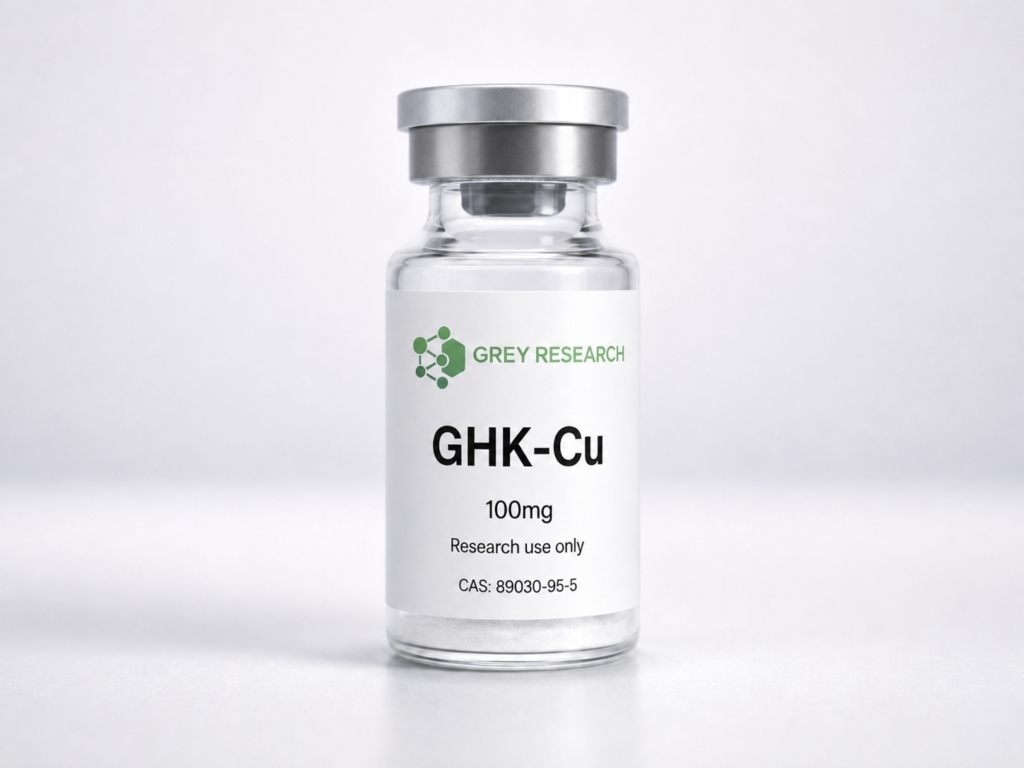
Naturally Occurring Tripeptide-Copper Complex | CAS: 89030-95-5
Overview
GHK-Cu (glycyl-L-histidyl-L-lysine copper(II) complex) is a naturally occurring tripeptide with exceptionally high affinity for copper(II) ions. First identified by Dr. Loren Pickart in human plasma in 1973, GHK-Cu has since been shown to influence the expression of over 4,000 human genes — approximately 31% of the human genome.
Plasma levels of GHK-Cu decline significantly with age: from ~200 ng/mL at age 20 to ~80 ng/mL by age 60. This decline correlates with reduced regenerative capacity, making GHK-Cu a major focus of aging and regenerative medicine research.
Mechanism of Action
- Gene expression modulation: GHK-Cu resets gene expression patterns toward a healthier state. Broad gene analysis (Pickart et al., 2012) shows it suppresses genes involved in fibrinogen synthesis, inflammation (IL-6, TNF-α), and tissue destruction while upregulating genes for collagen, decorin, and tissue inhibitors of metalloproteinases (TIMPs).
- Collagen & ECM synthesis: Stimulates production of collagen types I, III, IV, V, elastin, proteoglycans, and glycosaminoglycans (GAGs). Increases decorin and versican — key structural ECM components.
- Anti-inflammatory: Suppresses pro-inflammatory cytokines including TNF-α, IL-6, IL-1β, and TGF-β. Also inhibits thromboxane and pro-inflammatory prostaglandins.
- Antioxidant defense: Functions as a superoxide dismutase (SOD) mimic. Upregulates endogenous antioxidant enzymes. Sequesters copper ions to prevent Fenton reaction-mediated free radical generation.
- Stem cell recruitment: Attracts mesenchymal stem cells to sites of injury, promoting tissue regeneration.
- Metalloproteinase regulation: Modulates MMP-1, MMP-2, MMP-9 activity for controlled tissue remodeling without excessive degradation.
Pharmacokinetics
- Half-life: Rapidly degraded in plasma; functional effects persist due to gene expression changes.
- Copper delivery: GHK has the highest known affinity for Cu(II) among naturally occurring peptides (log K = 16.44).
- Distribution: Found in plasma, saliva, and urine. Concentrated at wound sites.
Published Research
- Pickart (2008) — Journal of Biomaterials Science: Comprehensive tissue remodeling review. Demonstrated collagen synthesis increases of up to 70% in fibroblast cultures.
- Pickart et al. (2012) — BioMed Research International: Broad gene expression analysis showing GHK-Cu modulates 4,048 genes in human fibroblasts.
- Canapp et al. (2003) — Wounds: Accelerated wound healing in canine models with 30% reduction in healing time.
- Siméon et al. (2000) — Journal of Investigative Dermatology: Dose-dependent stimulation of collagen and GAG synthesis in cultured fibroblasts.
- Siméon et al. (1999) — Life Sciences: GHK-Cu stimulated both collagen synthesis and metalloproteinase activity for balanced tissue remodeling.
- Maquart et al. (1999) — FEBS Letters: Demonstrated simultaneous collagen synthesis and MMP-2 activation.
- Leyden et al. (2002) — Cosmetic Dermatology: Topical GHK-Cu improved skin laxity, clarity, and reduced fine lines in clinical evaluation.
- Finkley et al. (2005) — Journal of Cosmetic Dermatology: GHK-Cu cream outperformed vitamin C and retinoic acid creams in collagen production metrics.
- Campbell et al. (2012) — Rejuvenation Research: GHK-Cu reversed gene expression patterns associated with COPD toward healthier states.
Research Applications
- Wound healing and tissue regeneration studies
- Dermal senescence and skin biology research
- Stem cell migration and differentiation
- Copper metabolism and metallobiology
- Gene expression reprogramming research
- Hair follicle biology and growth studies
Chemical Properties
- Sequence: Gly-His-Lys:Cu(II)
- Molecular Weight: 403.93 g/mol
- Molecular Formula: C14H23CuN6O4
- CAS Number: 89030-95-5
- Appearance: Blue lyophilized powder
- Solubility: Freely soluble in water
- Storage: -20°C lyophilized; 2-8°C reconstituted
Related product: GHK-Cu (Copper Peptide) — Janoshik-tested, COA included, research use only.
Disclaimer: This information is compiled from published peer-reviewed research for educational purposes only. Grey Research compounds are intended for in vitro research and laboratory use only. Not for human consumption.
Certificate of Analysis
Independent third-party HPLC lab test by Janoshik Analytical. Every batch is tested before release.
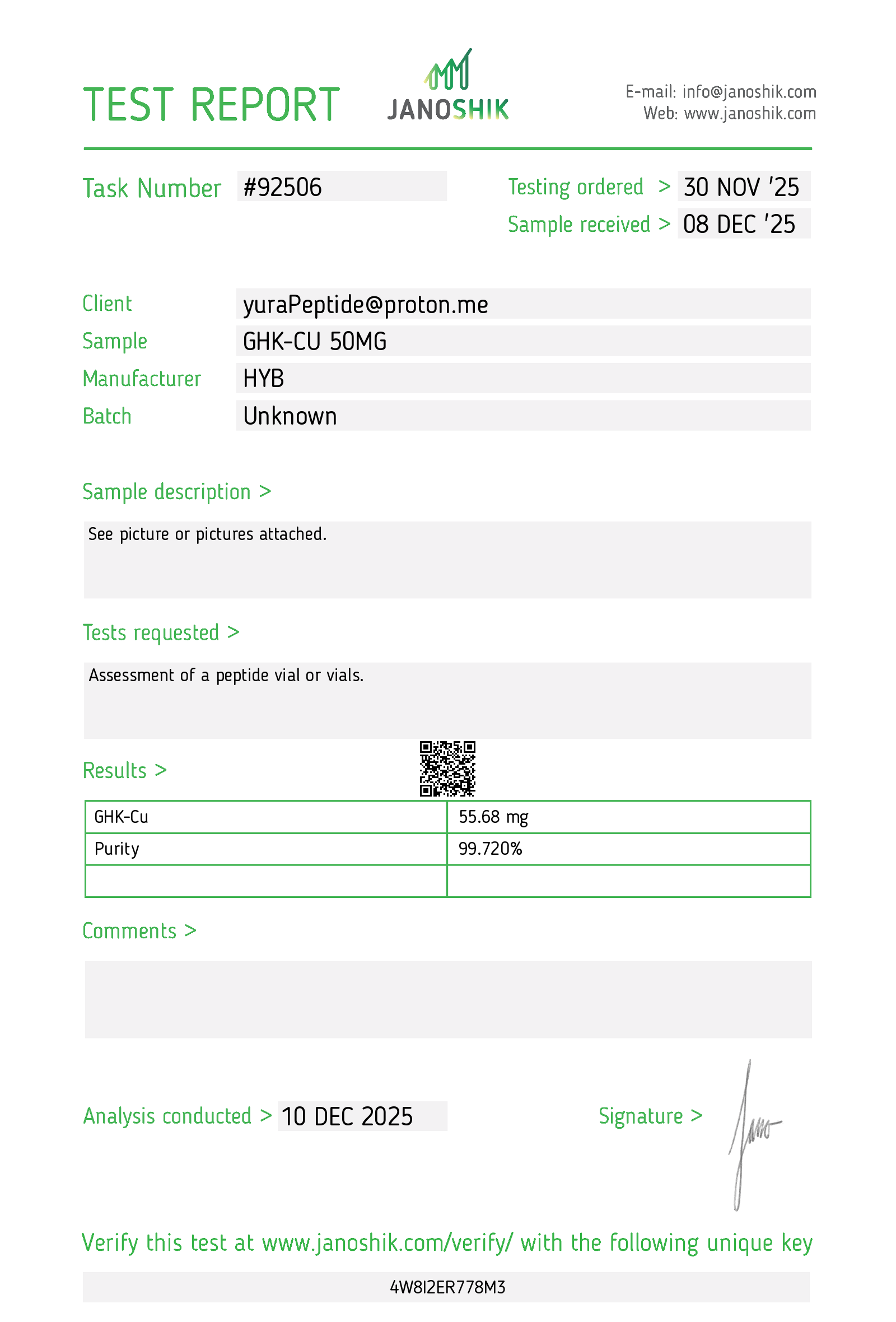
Click to view full-size lab report.