
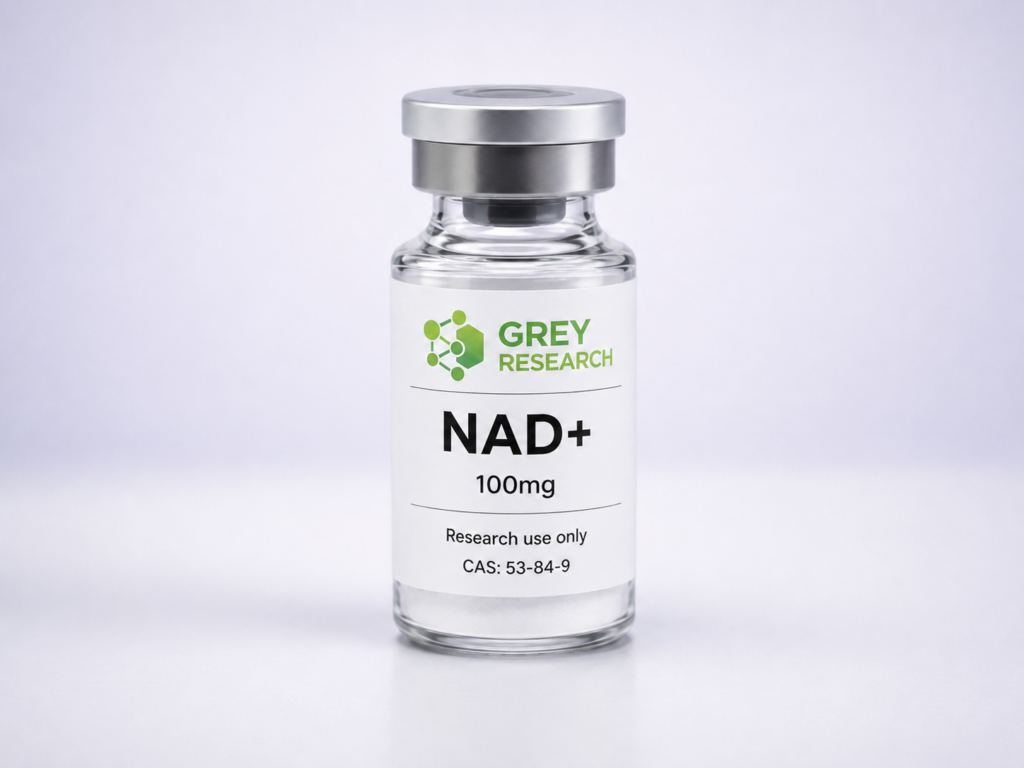
Essential Cellular Coenzyme | CAS: 53-84-9
Overview
Nicotinamide adenine dinucleotide (NAD+) is a critical coenzyme present in every living cell. It exists in two forms: the oxidized form (NAD+) and the reduced form (NADH). NAD+ serves as an essential electron carrier in metabolic redox reactions and as a substrate for signaling enzymes including sirtuins, PARPs, and CD38/CD157.
NAD+ levels decline significantly with age — dropping approximately 50% between ages 40 and 60 in multiple tissues. This decline has been identified as a key driver of aging-related metabolic dysfunction, making NAD+ one of the most actively researched compounds in geroscience and longevity biology. Over 2,500 peer-reviewed papers on NAD+ metabolism have been published since 2015.
Mechanism of Action
- Sirtuin activation: NAD+ is an obligate substrate for the sirtuin family of deacetylases (SIRT1-7). Sirtuins regulate gene expression, DNA repair, metabolism, and stress resistance. SIRT1 activates PGC-1α (mitochondrial biogenesis), FOXO transcription factors (stress defense), and suppresses NF-κB (inflammation). SIRT3 is the primary mitochondrial deacetylase.
- PARP-mediated DNA repair: NAD+ is consumed by poly-ADP-ribose polymerases (PARP1/2) during DNA damage repair. PARP1 detects single-strand breaks and uses NAD+ to synthesize poly-ADP-ribose chains that recruit repair machinery. Chronic DNA damage (aging, UV, oxidative stress) depletes NAD+ through excessive PARP activation.
- Mitochondrial function: NAD+ is essential for the electron transport chain (Complex I: NADH dehydrogenase) and the TCA cycle. NADH donates electrons to Complex I for ATP synthesis via oxidative phosphorylation. Declining NAD+ impairs mitochondrial respiration and increases ROS production.
- CD38 regulation: CD38 is the primary NAD+ consumer in mammals — responsible for ~80% of age-related NAD+ decline. CD38 activity increases with chronic inflammation (inflammaging). Targeting the NAD+/CD38 axis is a key research strategy.
- Circadian rhythm: NAD+ levels oscillate with circadian rhythm, linking metabolic activity to the circadian clock via SIRT1-CLOCK/BMAL1 interactions.
- Epigenetic regulation: NAD+-dependent sirtuins deacetylate histones, directly influencing chromatin structure and gene expression programs associated with aging.
NAD+ Biosynthesis Pathways
- Salvage pathway: Nicotinamide (NAM) → NMN (via NAMPT, the rate-limiting enzyme) → NAD+ (via NMNATs). This is the dominant pathway for NAD+ recycling in most tissues.
- Preiss-Handler pathway: Nicotinic acid (NA) → NAAD → NAD+. Uses dietary niacin/vitamin B3.
- De novo pathway: Tryptophan → quinolinic acid → NAD+. Minor contributor in most tissues except liver.
Published Research
- Yoshino et al. (2018) — Cell Metabolism: Landmark review of NAD+ intermediates as therapeutic targets for aging. Established framework for NAD+ supplementation research.
- Imai & Guarente (2014) — Trends in Cell Biology: Defined the NAD+/sirtuin axis as a central regulator of aging, establishing the “NAD World” hypothesis.
- Rajman et al. (2018) — Cell Metabolism: Comprehensive review of therapeutic potential of NAD+ boosting molecules (NMN, NR, NAD+).
- Camacho-Pereira et al. (2016) — Cell Metabolism: Identified CD38 as the primary driver of age-related NAD+ decline. CD38 knockout mice maintained youthful NAD+ levels.
- Gomes et al. (2013) — Cell: NAD+ decline impairs mitochondrial function in aging through pseudohypoxia. NMN supplementation reversed age-related mitochondrial dysfunction in mice.
- Yoshino et al. (2011) — Cell Metabolism: NMN supplementation improved glucose tolerance, lipid profiles, and prevented age-associated gene expression changes in mice.
- Mills et al. (2016) — Cell Metabolism: Long-term NMN supplementation mitigated age-related physiological decline across multiple organ systems in mice.
- Fang et al. (2017) — Cell Metabolism: NAD+ repletion improved mitochondrial function and extended lifespan in C. elegans. Also improved DNA repair capacity through PARP activation.
- Hou et al. (2018) — PNAS: NAD+ supplementation improved cognitive function and reduced neuroinflammation in Alzheimer’s disease mouse models.
Research Applications
- Aging and longevity (geroscience) research
- Mitochondrial biology and bioenergetics
- DNA damage repair and genomic stability studies
- Metabolic disease (obesity, diabetes, NAFLD) investigation
- Neurodegenerative disease modeling
- Circadian rhythm and metabolic clock research
- Epigenetic aging and reprogramming studies
- Cardiovascular aging and function research
Chemical Properties
- Molecular Weight: 663.43 g/mol
- Molecular Formula: C21H27N7O14P2
- CAS Number: 53-84-9
- Appearance: White to yellow lyophilized powder
- Solubility: Freely soluble in water
- Stability: Sensitive to light and heat; store at -20°C
- Storage: -20°C lyophilized, protect from light; 2-8°C reconstituted (use within 7 days)
Disclaimer: This information is compiled from published peer-reviewed research for educational purposes only. Grey Research compounds are intended for in vitro research and laboratory use only. Not for human consumption.
Certificate of Analysis
Independent third-party HPLC lab test by Janoshik Analytical. Every batch is tested before release.
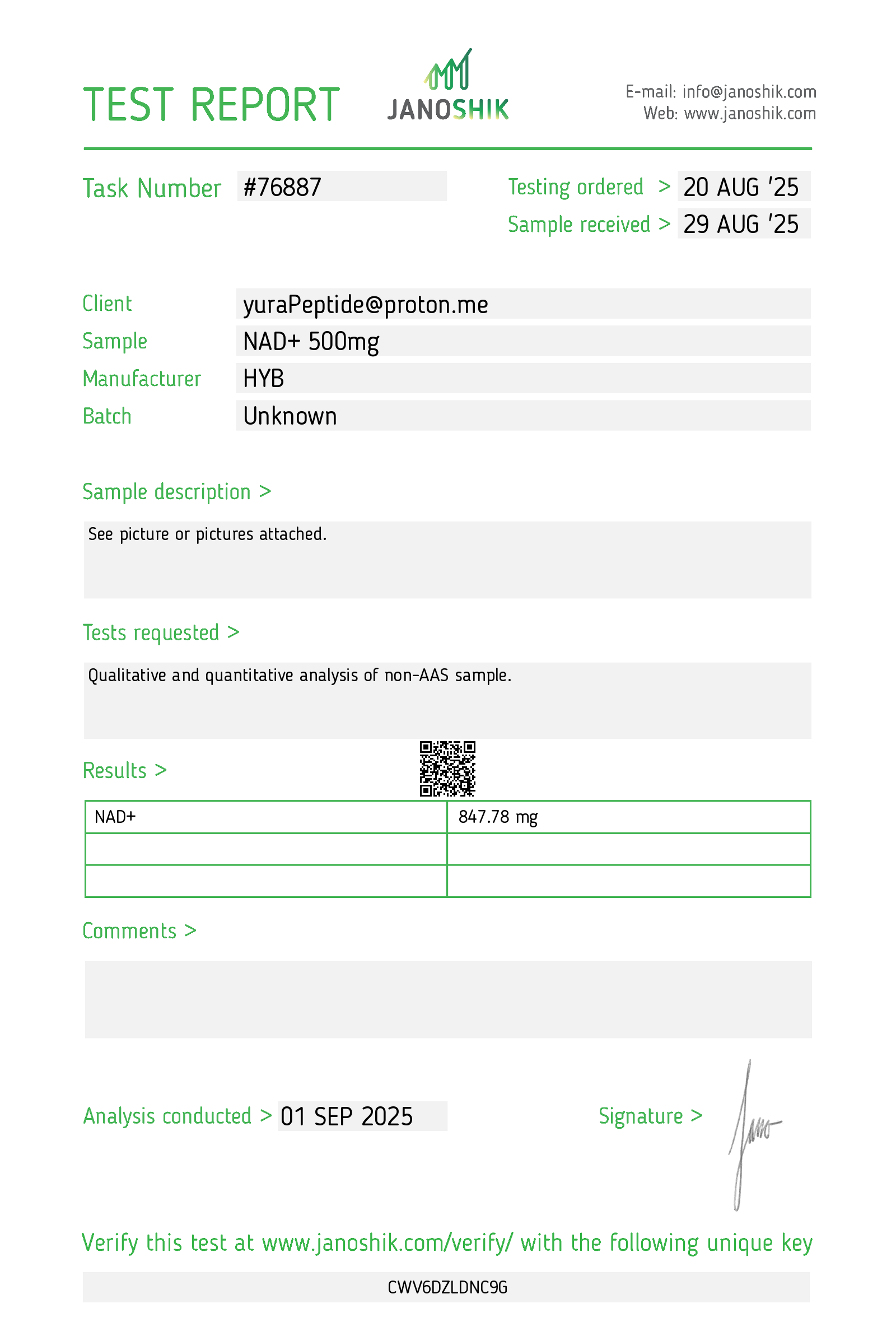
Click to view full-size lab report.