
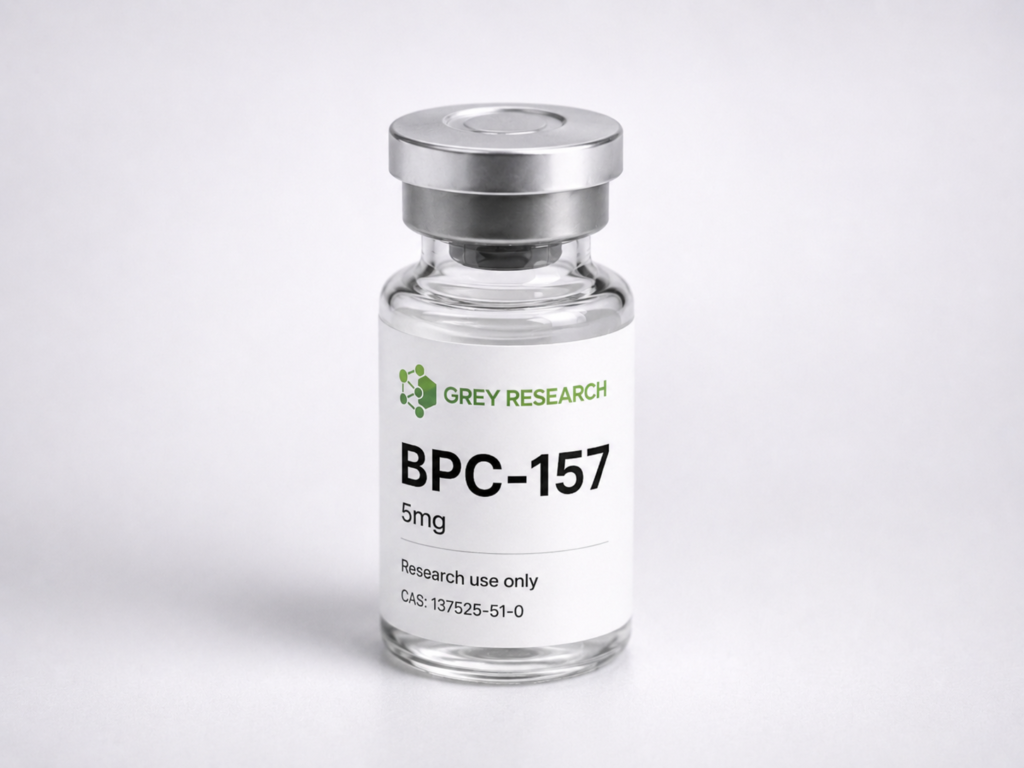
Gastric Pentadecapeptide | CAS: 137525-51-0
Overview
BPC-157 (Body Protection Compound-157) is a 15-amino-acid synthetic peptide derived from a protective protein found in human gastric juice. It is one of the most extensively studied cytoprotective peptides in preclinical literature, with over 100 published studies demonstrating effects across multiple organ systems.
Unlike most peptides that act through a single receptor, BPC-157 appears to operate through multiple mechanisms simultaneously — modulating nitric oxide, VEGF, FAK-paxillin, and growth hormone receptor pathways. This multi-target activity has made it a subject of intense research interest.
Mechanism of Action
- VEGF upregulation: Promotes angiogenesis (new blood vessel formation) at injury sites, improving blood supply and nutrient delivery to healing tissues. Increases VEGF, VEGFR2, and CD34+ progenitor cell markers.
- FAK-paxillin pathway: Activates focal adhesion kinase signaling, critical for cell migration and tendon-to-bone healing. Accelerates formation of the tendon-bone junction after injury.
- Nitric oxide system: Modulates both eNOS and iNOS pathways. Maintains vascular integrity and tissue perfusion. Counteracts both NO excess and deficiency — acts as an NO system stabilizer.
- Growth hormone receptor: Upregulates GHR expression in injured tissues, enhancing local sensitivity to circulating GH and IGF-1 for tissue repair.
- Dopamine system: Interacts with dopaminergic pathways. Counteracts dopamine-related damage models. May provide neuroprotective effects through D2 receptor modulation.
- GABAergic modulation: Influences GABA-A receptor activity, relevant to its observed effects on anxiety-like behavior in animal models.
Pharmacokinetics
- Stability: Remarkably stable in human gastric juice (does not hydrolyze), unlike most peptides.
- Routes studied: Subcutaneous, intraperitoneal, intragastric, and topical in preclinical models.
- Effective doses in research: 10 μg/kg to 10 ng/kg range in animal models.
Published Research
- Sikiric et al. (2018) — Current Pharmaceutical Design: Comprehensive review covering 20+ years of BPC-157 research. Documented effects on muscle, tendon, bone, ligament, GI tract, liver, brain, and vascular tissues.
- Chang et al. (2011) — Journal of Orthopaedic Research: BPC-157 accelerated tendon-to-bone healing by 2-3x in rat rotator cuff models. Enhanced collagen organization at repair sites.
- Seiwerth et al. (2014) — Current Medicinal Chemistry: GI tract cytoprotective mechanisms. BPC-157 prevented and reversed damage from NSAIDs, alcohol, and bile acids in gastric models.
- Tkalcevic et al. (2007) — Life Sciences: Accelerated burn wound healing with improved re-epithelialization rates.
- Sikiric et al. (2010) — Journal of Pharmacological Sciences: Demonstrated hepatoprotective effects and liver regeneration promotion after partial hepatectomy.
- Cesarec et al. (2013) — European Journal of Pharmacology: Counteracted corticosteroid-impaired muscle healing in animal models.
- Staresinic et al. (2006) — Journal of Physiology: BPC-157 improved healing of transected quadriceps muscle with improved functional recovery.
- Klicek et al. (2013) — Journal of Surgical Research: Promoted anastomotic healing and prevented abdominal adhesion formation in surgical models.
Research Applications
- Tendon, ligament, and muscle repair studies
- Gastrointestinal cytoprotection research
- Wound healing and burn models
- Neuroprotection and CNS repair investigation
- Liver regeneration studies
- Inflammatory bowel disease modeling
- Post-surgical healing research
Chemical Properties
- Sequence: Gly-Glu-Pro-Pro-Pro-Gly-Lys-Pro-Ala-Asp-Asp-Ala-Gly-Leu-Val
- Molecular Weight: 1419.53 g/mol
- CAS Number: 137525-51-0
- Appearance: White lyophilized powder
- Storage: -20°C lyophilized; 2-8°C reconstituted
Disclaimer: This information is compiled from published peer-reviewed research for educational purposes only. Grey Research compounds are intended for in vitro research and laboratory use only. Not for human consumption.
Certificate of Analysis
Independent third-party HPLC lab test by Janoshik Analytical. Every batch is tested before release.
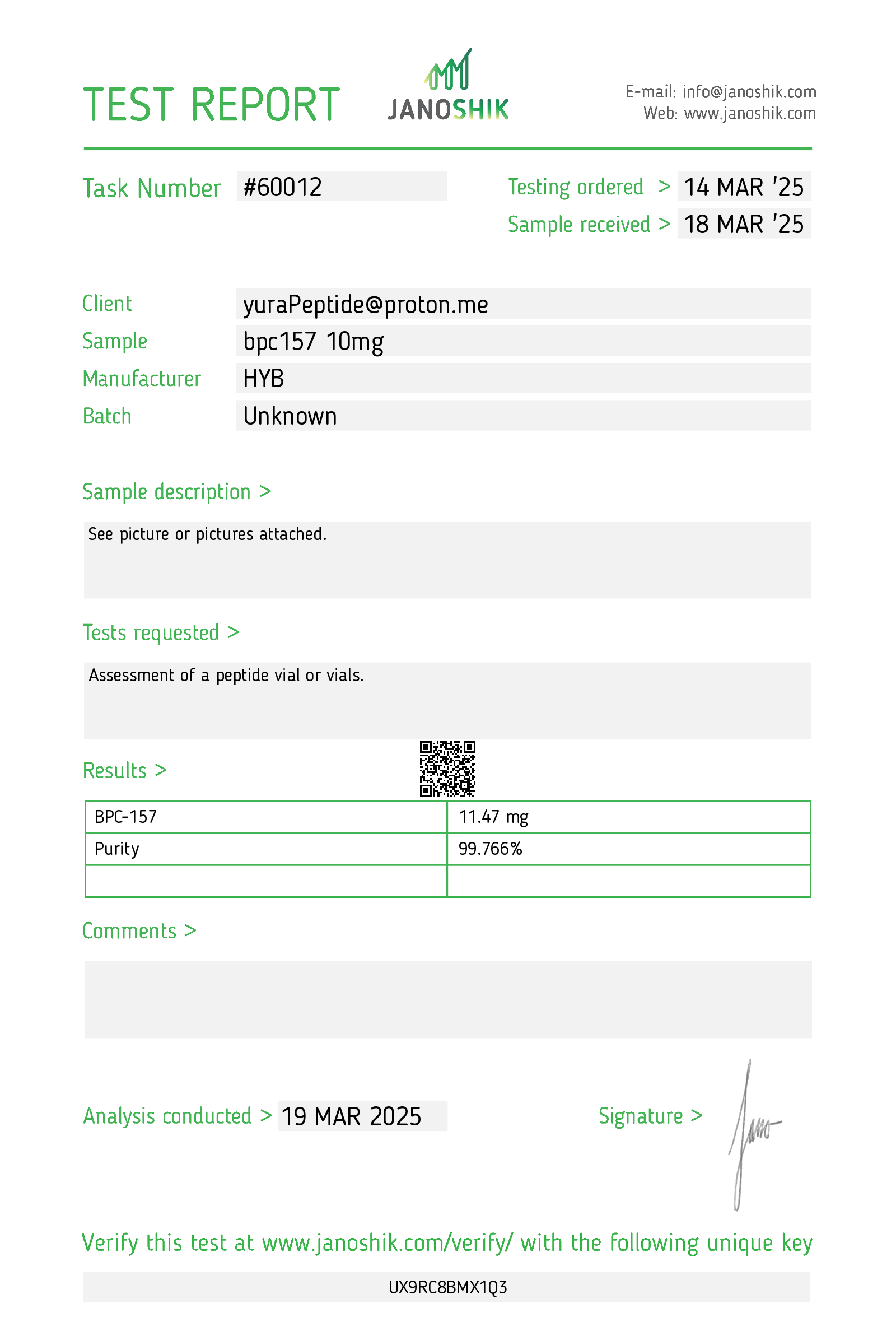
Click to view full-size lab report.