
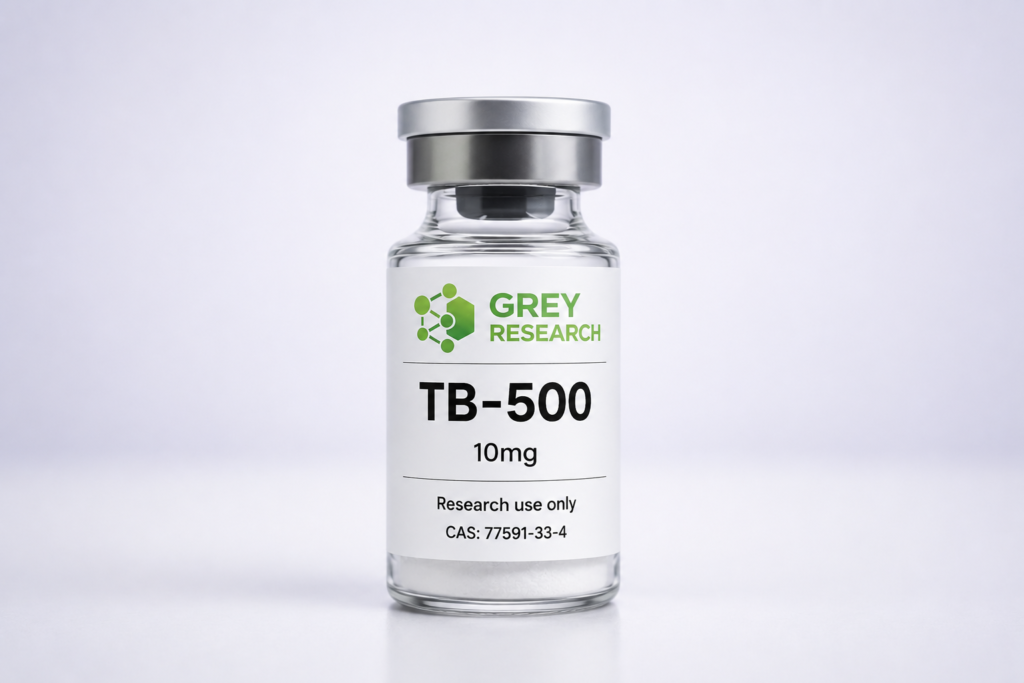
Actin-Sequestering Peptide | CAS: 77591-33-4
Overview
TB-500 is the active synthetic fragment of thymosin beta-4 (Tβ4), a 43-amino-acid peptide ubiquitously expressed in all tissues and cell types except red blood cells. Thymosin beta-4 is the most abundant member of the beta-thymosin family and plays critical roles in actin dynamics, cell migration, angiogenesis, and tissue repair.
TB-500 contains the actin-binding domain of Tβ4 responsible for its biological activity. It is one of the most studied peptides in regenerative biology, with particular relevance to cardiac, dermal, ocular, and musculoskeletal healing research.
Mechanism of Action
- Actin regulation: Sequesters monomeric G-actin to regulate polymerization dynamics. This promotes cell motility and migration — critical for wound repair. The 17-amino-acid actin-binding motif (LKKTETQ) is the key functional domain.
- Cell migration: Promotes migration of endothelial cells, keratinocytes, and fibroblasts to injury sites. Upregulates Akt/PI3K pathway signaling for cell survival during migration.
- Anti-inflammatory: Suppresses NF-κB activation and reduces expression of TNF-α, IL-1β, IL-6, and IL-8. Promotes M2 macrophage polarization (anti-inflammatory/repair phenotype).
- Anti-fibrotic: Reduces collagen deposition in fibrotic tissue. Promotes organized, functional tissue repair over scar formation. Downregulates TGF-β-driven fibrotic signaling.
- Angiogenesis: Promotes new blood vessel formation through endothelial cell differentiation and migration. Upregulates VEGF and angiopoietin-1 expression.
- Hair follicle biology: Associated with hair follicle stem cell migration and differentiation via beta-catenin signalling in animal models.
Published Research
- Goldstein et al. (2005) — Annals of the New York Academy of Sciences: Comprehensive review of thymosin beta-4 biology and therapeutic potential across multiple organ systems.
- Malinda et al. (1999) — Journal of Investigative Dermatology: Tβ4 accelerated dermal wound healing. Increased keratinocyte migration by 42% and angiogenesis in wound bed.
- Sosne et al. (2007) — Experimental Eye Research: Anti-inflammatory effects in corneal wound healing. Reduced TNF-α and IL-8 by >50%.
- Bock-Marquette et al. (2004) — Nature: Tβ4 promoted cardiac cell survival after myocardial infarction via Akt pathway activation. Reduced infarct size by 50%.
- Smart et al. (2007) — Nature: Tβ4 activated adult epicardial progenitor cells and induced neovascularization in ischemic heart tissue.
- Philp et al. (2004) — FASEB Journal: Tβ4 promoted corneal epithelial migration and reduced inflammation in ocular surface injury models.
- Philp et al. (2006) — Wound Repair and Regeneration: Characterised follicular stem cell activation and migration.
- Crockford et al. (2010) — Annals of the NY Academy of Sciences: Anti-fibrotic effects in hepatic and cardiac fibrosis models.
Research Applications
- Wound healing and dermal regeneration
- Cardiac repair and ischemic injury research
- Musculoskeletal injury and recovery studies
- Ocular surface repair investigation
- Hair follicle biology and growth research
- Anti-fibrotic therapy development
- Inflammatory disease modeling
Chemical Properties
- Parent protein: Thymosin Beta-4 (43 amino acids)
- Active domain: 17-amino-acid actin-binding motif (LKKTETQ)
- Molecular Weight (Tβ4): 4,963 g/mol
- CAS Number: 77591-33-4
- Appearance: White lyophilized powder
- Storage: -20°C lyophilized; 2-8°C reconstituted
Disclaimer: This information is compiled from published peer-reviewed research for educational purposes only. Grey Research compounds are intended for in vitro research and laboratory use only. Not for human consumption.
Certificate of Analysis
Independent third-party HPLC lab test by Janoshik Analytical. Every batch is tested before release.
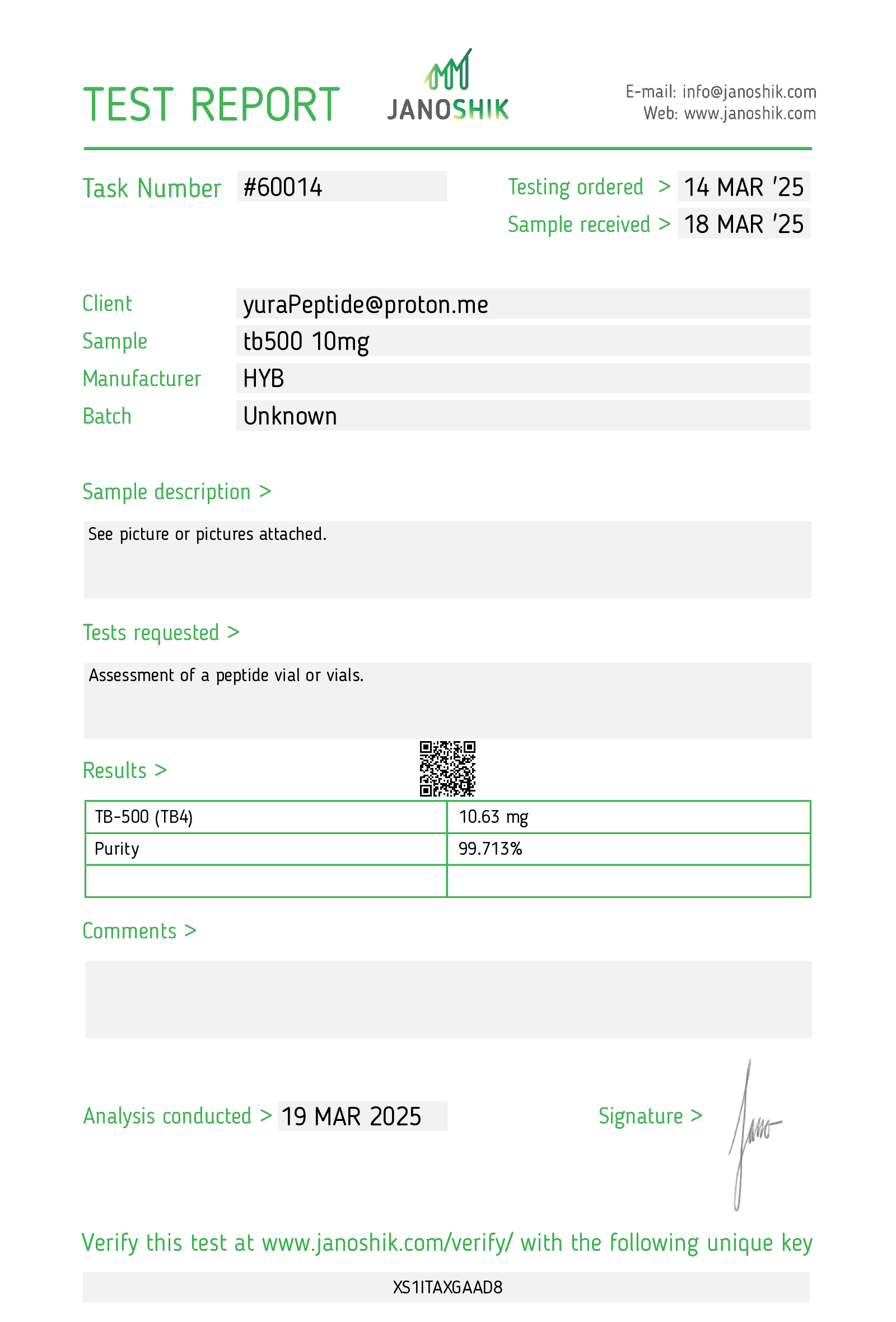
Click to view full-size lab report.