
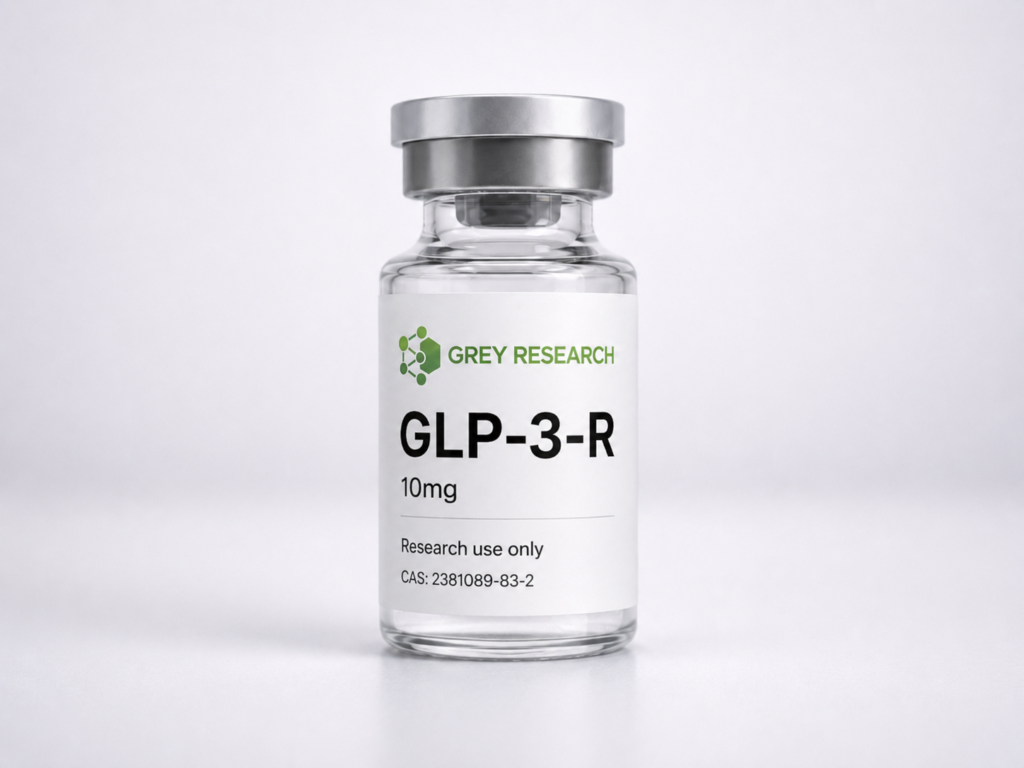
Triple-Action Incretin Receptor Agonist
Overview
GLP-3-R is a novel triple-action receptor agonist that simultaneously targets three key metabolic receptors: GLP-1 (glucagon-like peptide-1), GIP (glucose-dependent insulinotropic polypeptide), and glucagon receptors. This tri-agonist approach engages three receptor pathways within a single molecule.
Unlike dual-agonists that target GLP-1/GIP or GLP-1/glucagon, this molecule engages all three receptor pathways simultaneously. Published characterisation of the compound class is summarised below.
Mechanism of Action
- GLP-1 Receptor (GLP-1R): Stimulates glucose-dependent insulin secretion from pancreatic beta cells. Suppresses glucagon release. Slows gastric emptying. Activates hypothalamic satiety centers to reduce appetite. GLP-1R activation accounts for the primary anorexigenic effect.
- GIP Receptor (GIPR): Enhances insulin secretion synergistically with GLP-1R activation. Promotes lipid metabolism and adipose tissue remodeling. Improves beta-cell function and survival. GIPR activation may contribute to improved tolerability versus GLP-1-only agonists.
- Glucagon Receptor (GCGR): Increases energy expenditure through enhanced thermogenesis. Promotes hepatic lipid oxidation and reduces hepatic steatosis. Stimulates amino acid catabolism. The glucagon component is what distinguishes triple-agonists from dual GLP-1/GIP agonists like tirzepatide, providing additional energy expenditure effects.
Pharmacokinetics
- Half-life: Approximately 6 days, as reported in published pharmacokinetic characterisation.
- Structure: Modified GIP peptide backbone with GLP-1 and glucagon receptor activity engineered through amino acid substitutions.
- C-20 fatty acid: Acylation with a C-20 fatty diacid enables extended albumin binding for prolonged half-life.
Published Research
- Coskun et al. (2022) — Cell Metabolism: Preclinical characterisation of tri-agonist receptor engagement alongside mono- and dual-agonists in rodent and primate models.
- Jastreboff et al. (2023) — New England Journal of Medicine: Phase 2 TRIUMPH trial. Dose-ranging clinical study across the tri-agonist dose series. Most common adverse events were GI-related (nausea, diarrhea).
- Rosenstock et al. (2023) — The Lancet: Phase 2 study in type 2 diabetes examining glycemic endpoints across the dose range.
- Urva et al. (2022) — Cell Metabolism: Pharmacokinetic and pharmacodynamic characterization. Demonstrated unique metabolic signature distinct from dual-agonists.
- Finan et al. (2015) — Nature Medicine: Foundational unimolecular tri-agonist concept paper demonstrating synergistic metabolic benefits in preclinical models.
Research Applications
- Obesity and metabolic syndrome research
- Type 2 diabetes and insulin resistance studies
- Hepatic lipid metabolism and NAFLD/NASH investigation
- Energy expenditure and thermogenesis research
- Incretin receptor signaling pathway studies
- Comparative agonist pharmacology (mono vs. dual vs. triple)
Janoshik test results coming soon.
Related product: GLP-3-R (Retatrutide) — Janoshik-tested, COA included, research use only.
Disclaimer: This information is compiled from published peer-reviewed research for educational purposes only. Grey Research compounds are intended for in vitro research and laboratory use only. Not for human consumption.
Certificate of Analysis
Independent third-party HPLC lab test by Janoshik Analytical. Every batch is tested before release.
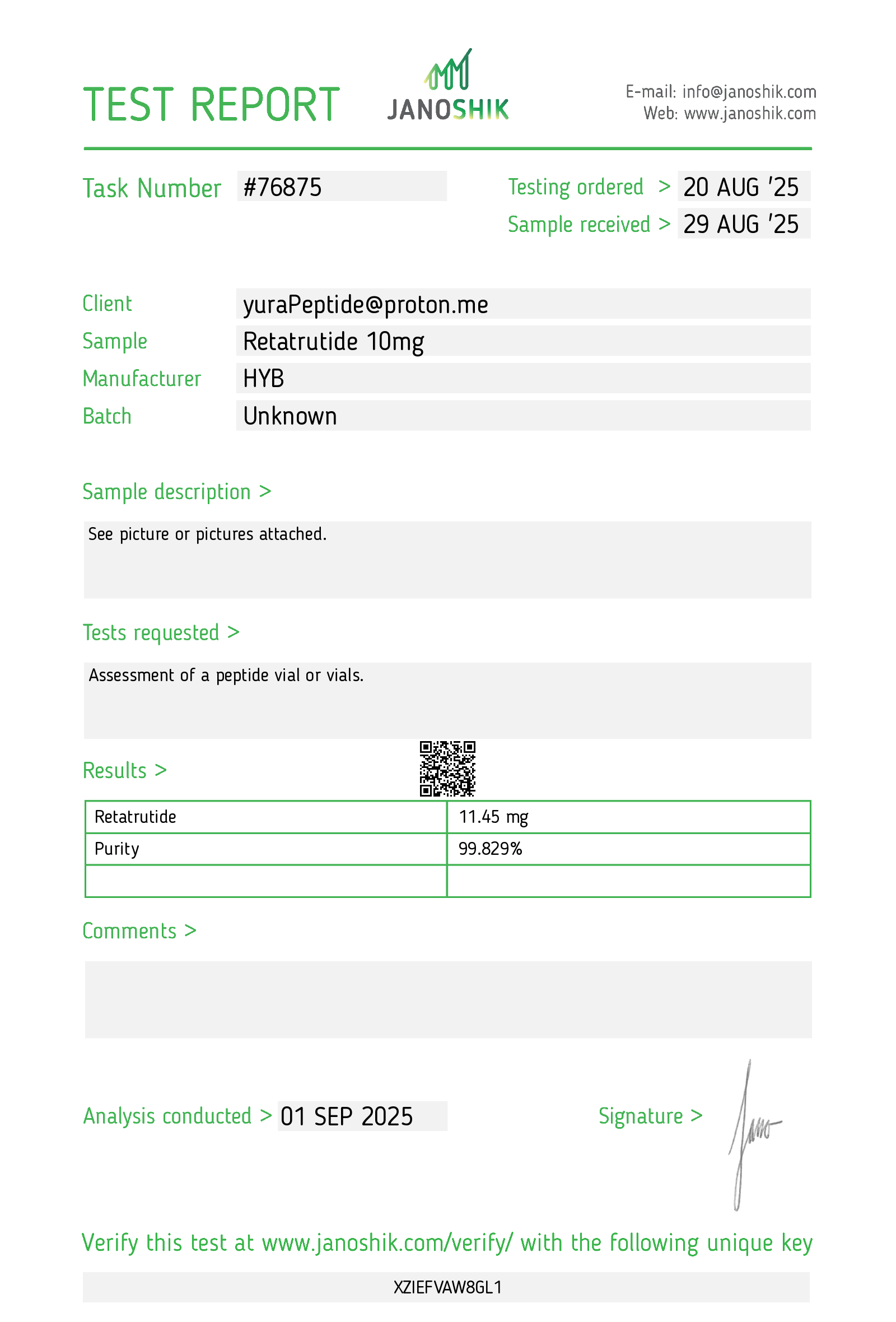
Click to view full-size lab report.