
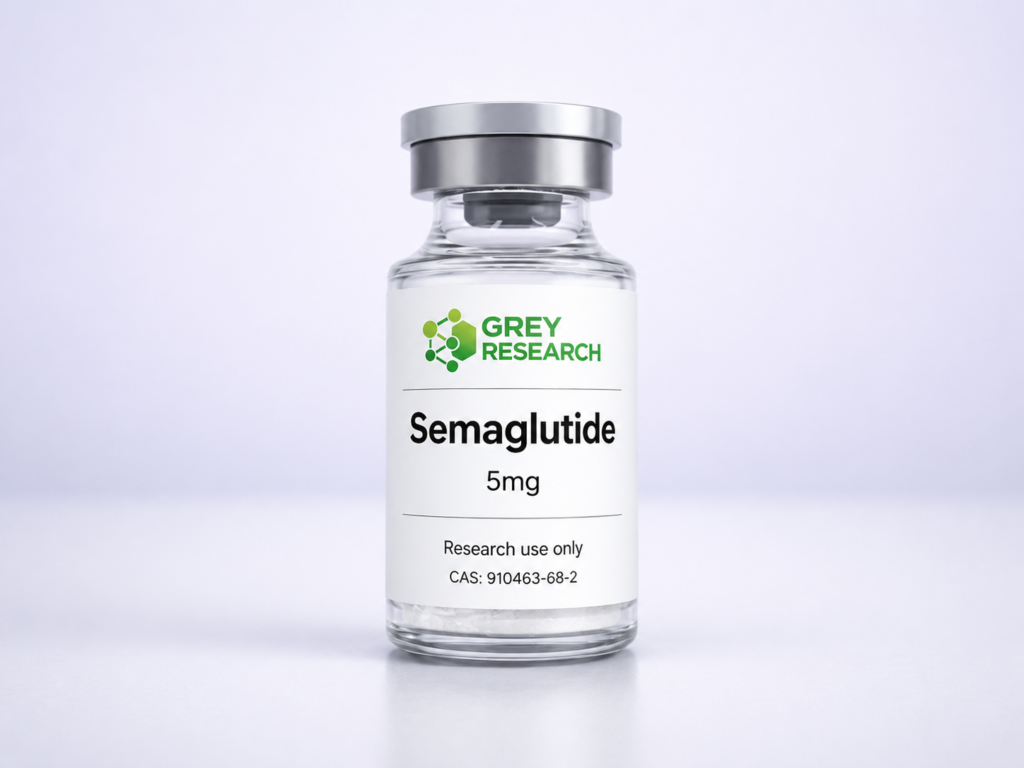
Long-Acting GLP-1 Receptor Agonist | CAS: 910463-68-2
Overview
Semaglutide is a long-acting glucagon-like peptide-1 (GLP-1) receptor agonist with 94% structural homology to native human GLP-1. Developed by Novo Nordisk, it features three key modifications that extend its half-life from ~2 minutes (native GLP-1) to approximately 7 days: an Aib substitution at position 8 for DPP-4 resistance, an Arg→Arg substitution at position 34, and a C-18 fatty diacid acylation at Lys26 for enhanced albumin binding.
Semaglutide is currently the most studied GLP-1 agonist, with extensive clinical trial programs (SUSTAIN, STEP, PIONEER, SELECT) documenting its effects on glycemic control, body weight, and cardiovascular outcomes.
Mechanism of Action
- GLP-1R agonism: Binds and activates GLP-1 receptors on pancreatic beta cells, triggering glucose-dependent insulin secretion. This glucose-dependence provides a safety advantage — insulin is only released when blood glucose is elevated.
- Glucagon suppression: Reduces inappropriate glucagon secretion from pancreatic alpha cells, lowering hepatic glucose output.
- Hypothalamic appetite regulation: Activates GLP-1R in the arcuate nucleus and other hypothalamic regions, suppressing NPY/AgRP (orexigenic) neurons while activating POMC/CART (anorexigenic) neurons. Also acts on the brainstem NTS (nucleus tractus solitarius) to reduce food intake.
- Gastric emptying: Delays gastric emptying by 10-30%, reducing postprandial glucose excursions and promoting satiety.
- Beta-cell effects: Promotes beta-cell proliferation, inhibits apoptosis, and enhances insulin gene transcription. Long-term studies suggest improved beta-cell mass preservation.
- Cardiovascular: Demonstrated direct anti-atherosclerotic effects including reduced arterial inflammation, improved endothelial function, and decreased macrophage foam cell formation.
Pharmacokinetics
- Half-life: ~7 days (168 hours).
- Bioavailability: ~89% subcutaneous; ~0.4-1% oral (requires SNAC absorption enhancer).
- Protein binding: >99% albumin-bound in circulation.
- Metabolism: Proteolytic degradation and beta-oxidation of fatty acid chain.
- Steady state: Reached after 4-5 weeks of repeat administration in the cited studies.
Published Research
- Wilding et al. (2021) — New England Journal of Medicine: STEP 1 trial. Placebo-controlled study of GLP-1 receptor agonism over 68 weeks (n=1,961).
- Marso et al. (2016) — New England Journal of Medicine: SUSTAIN-6 trial. Cardiovascular outcomes study demonstrating 26% reduction in MACE (major adverse cardiovascular events). Significant reductions in non-fatal stroke and MI.
- Davies et al. (2017) — The Lancet: SUSTAIN-2 trial. 56-week comparative study of glycemic endpoints in type 2 diabetes.
- Rubino et al. (2021) — JAMA: STEP 4. Withdrawal-design study examining endpoints after discontinuation of treatment.
- Lincoff et al. (2023) — New England Journal of Medicine: SELECT trial. 2.4mg semaglutide reduced MACE by 20% in overweight/obese adults without diabetes (n=17,604).
- Kosiborod et al. (2023) — NEJM: STEP-HFpEF trial. Semaglutide improved symptoms and physical function in heart failure with preserved ejection fraction.
Research Applications
- Metabolic syndrome and obesity research
- Type 2 diabetes and insulin resistance studies
- Cardiovascular protection investigation
- Appetite regulation and food intake studies
- NAFLD/NASH and hepatic lipid metabolism
- Beta-cell preservation and regeneration research
- Neuroinflammation and neurodegeneration studies
Chemical Properties
- Molecular Weight: 4,113.58 g/mol
- Molecular Formula: C187H291N45O59
- CAS Number: 910463-68-2
- Modifications: Aib8, Arg34, Lys26-C18 fatty diacid via OEG-OEG linker
- Appearance: White to off-white lyophilized powder
- Storage: -20°C lyophilized; 2-8°C reconstituted
Disclaimer: This information is compiled from published peer-reviewed research for educational purposes only. Grey Research compounds are intended for in vitro research and laboratory use only. Not for human consumption.
Certificate of Analysis
Independent third-party HPLC lab test by Janoshik Analytical. Every batch is tested before release.
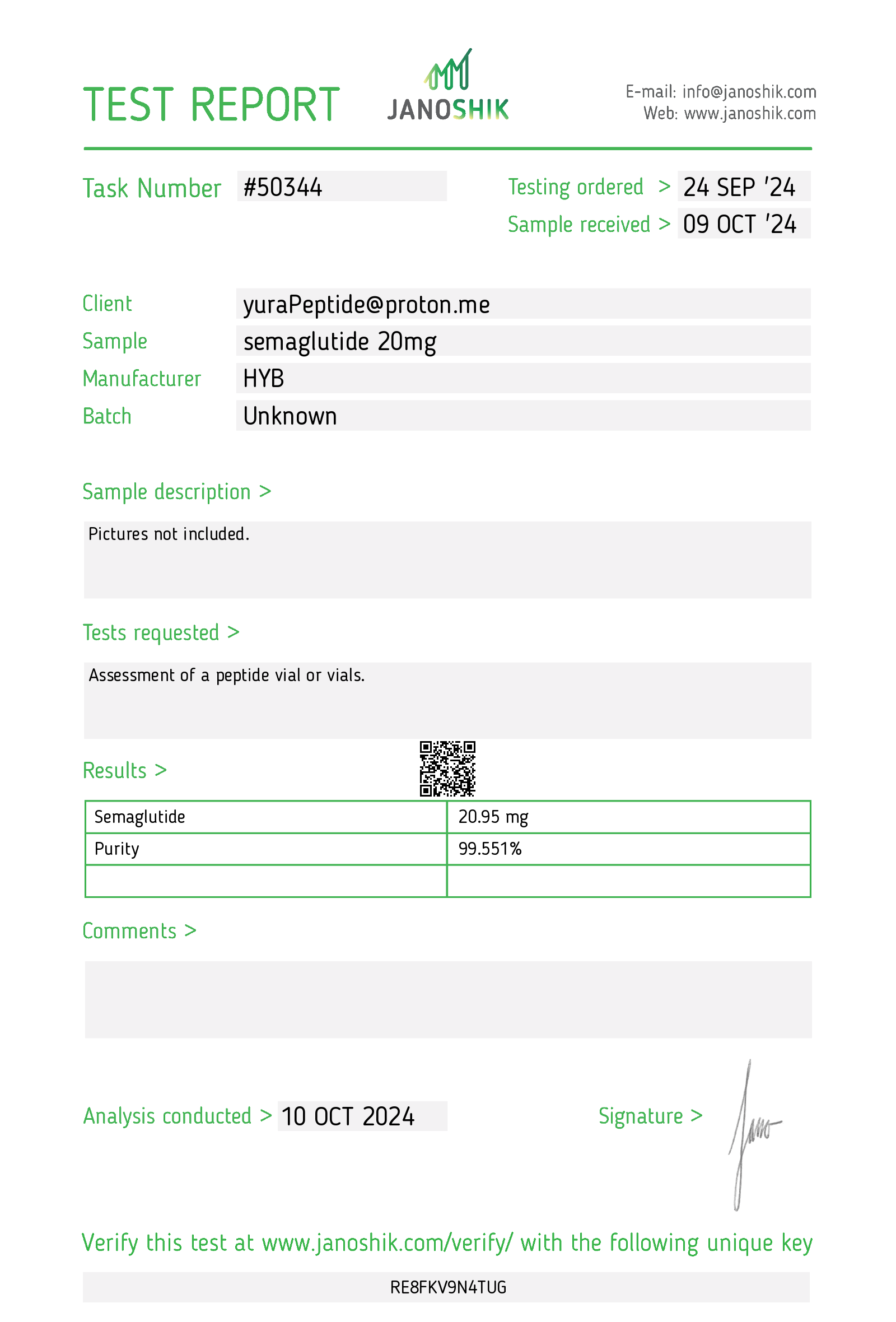
Click to view full-size lab report.